As I progress further in my film journey I have been reading more and more.
As I have started to broaden my knowledge base I’ve realised that I have never actually performed any tests on my exposure and development. I had seen that people like to rate their films differently but unless I was “Pushing to shoot in low light because I don’t have any other idea” I shoot at box speed and develop whatever the box or massive dev chart says.
This changes now!
I am trying to be less distracted by shiney new things and stick to one film type and one (or two) developers. My film of choice at the moment is FP4 and developer is Ilford HC at 1:31 and I have found that I often over develop.
Whilst I’m very happy with Ilfotec HC results most of the time I’m also very keen to be more self sufficient. I’m used to mixing my own buffers at work, and for quite a while now I have had the raw chemicals to make D76, which I’ve made but it’s never worked out for me.
Having found John Finch’s Pictorial Planet website and YouTube channel a while ago, I had been wanting to make my own D23 and replenisher. So I did. It’s essentially a stripped back D76.
Whilst the mixing and developing of the D23 worked well, I screwed up the replenisher making process, and I know this because the bottle was bright yellow 12 hours after making it, suggesting a fair bit of oxidation. Or my dog is peeing in my chemical bottles just to mess with me. I wouldn’t put it past her you know…
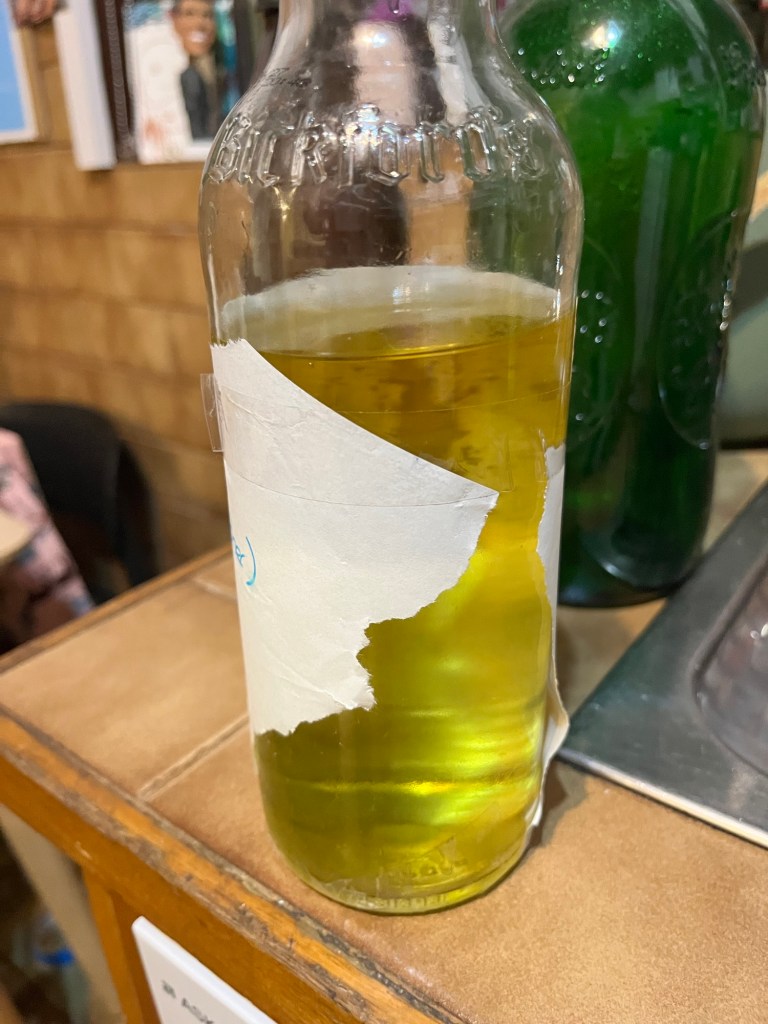
I bought new set of scales becuase my old ones could only do the the nearest gram and I needed a more accurate half gram measurement, and this time made it up correctly. Basically because I didn’t have any Sodium Metaborate I made it using Borax and Sodium Hydroxide, but instead of making it separately and mixing it into the replenisher, I just made it up in one. I should have guess there was a problem the moment the borax precipitated. Live and learn I guess.
Anyway with the correctly made replenisher in hand, I grabbed 3 films and “Ripened” the D23. (Basically used it to develop the film and then but the film back in the bottle) this is supposed to create some by-products such as bromide (I think) which then works well with the replenisher for…”Reasons”…look, chemistry was never my strong point.
After the third film I added 22ml of the replenisher and topped up the D23 back to its original starting volume (basically about 22ml of original developer gets discarded).
Now that I have my developer I needed to determine how this new (to me) developer acted on my film of choice (FP4).
To do this, I loaded my EOS33 with a roll of FP4 and used my trusty Sekonic Digi Lite F light meter to set middle grey (Zone 5) on a grey wall. I took a photo at film base + fog, then -4 stops, -3.5 stops, -3 and -2.5. these were developed for 8 minutes in D23r. Why did I choose 8 minutes you might ask? Well the Massive Dev chart suggested 12 minutes for FP4 and that’s insane. For HP5 it suggested 7:30 so I decided to try the HP5 time and add 30 seconds for…reasons…seemed liken a good idea and 8 minutes is a nice number to start with.
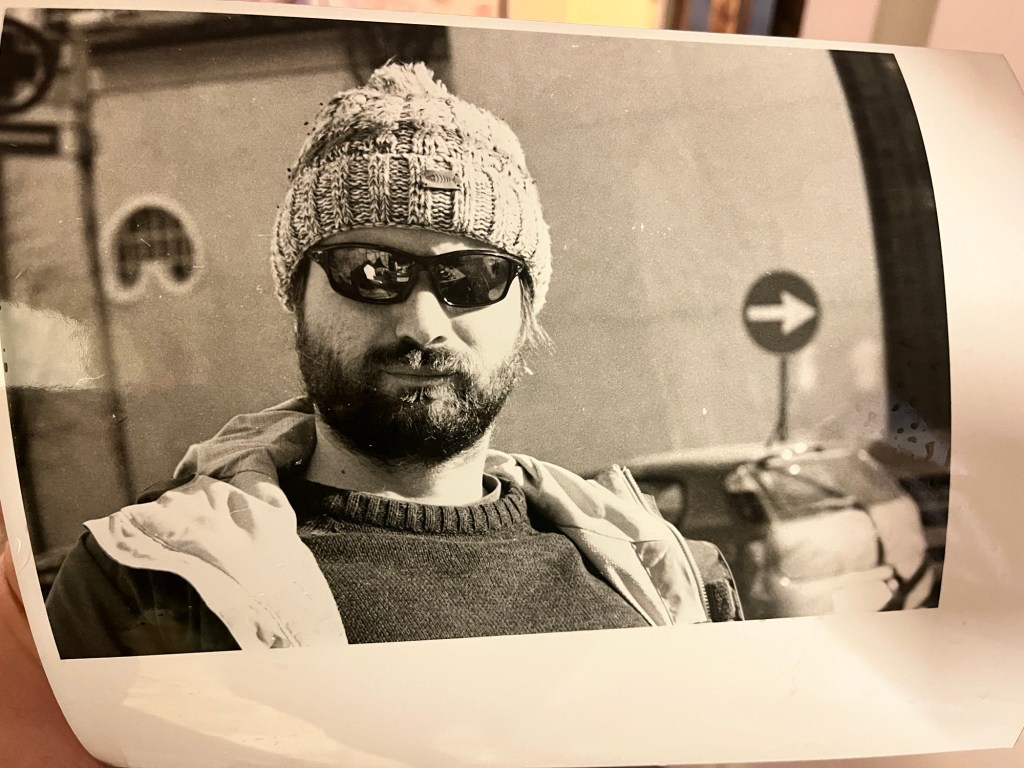
The HP5 roll I developed was beautiful!
But I digress.
I then took those frames and made a couple of prints. The first being a test strip on film base + fog. To get my DMax (Max black) it came out to need about 6 seconds at F/8 so I stopped down to F/11 and gave it 12 seconds. I then used that time on the next few frames at -4 and half stops since then.
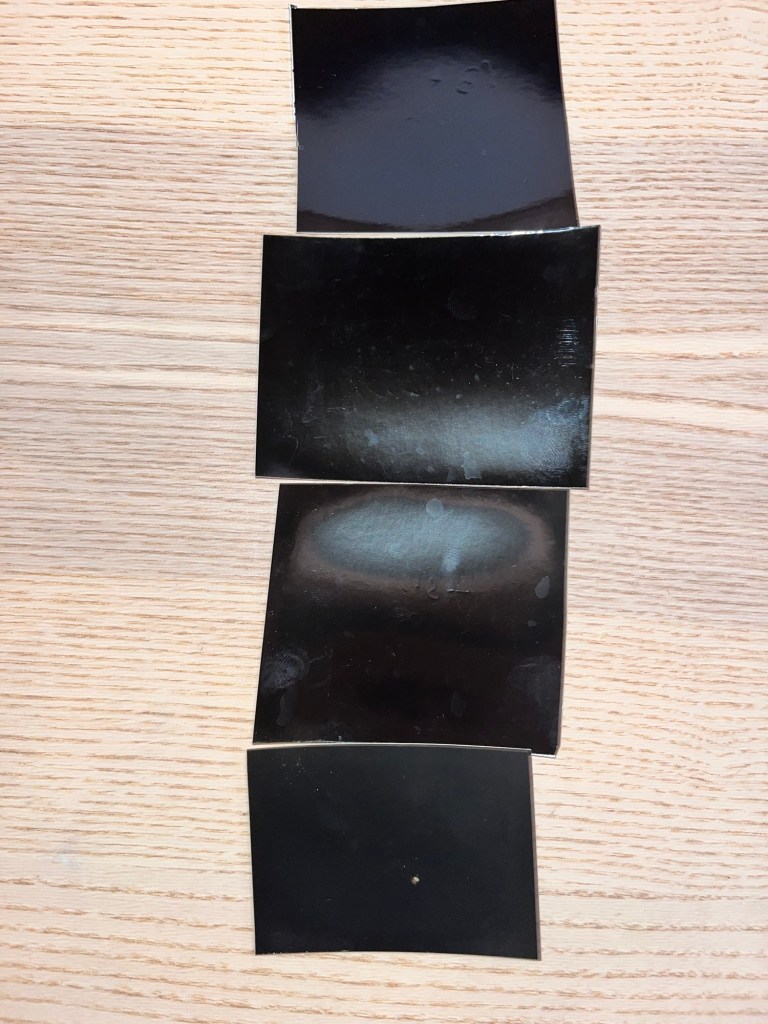
After developing the test strip pieces, I use them to determine which of my test strips is the last shift in tone before it goes to max black. The -4 stops which should corrrespond the Zone 1 was identical to DMax. This meant that by shooting the FP4 assuming box speed (125) I was not getting a zone 1 when stopping down 4 stops and developing with D23. In fact it was the -3.5 stops test strip that gave me the tonal shift. This means that I need to rate the film at half a stop slower (or ISO88…80 for ease).
Now, the eagle eyed amongst yeah may have noticed a problem. If I set my film speed to 80, and develop at 8 minutes, I may get that zone 1 looking nice but I’ll probably blow out my highlights. And indeed you’re possibly right.
So phase 2 is reshooting my aesthetically pleasing grey wall at ISO80 and setting the shutter to 4 stops faster. This will give me Zone 9, which should be distinct from Zone 10 (pure white). If it matches the paper base colour when trying to print at 12 seconds, I know I need to reduce my development time. As this half is a pain in the butt to do, I haven’t yet done it.
Instead, I spent the evening printing more from that HP5 roll.
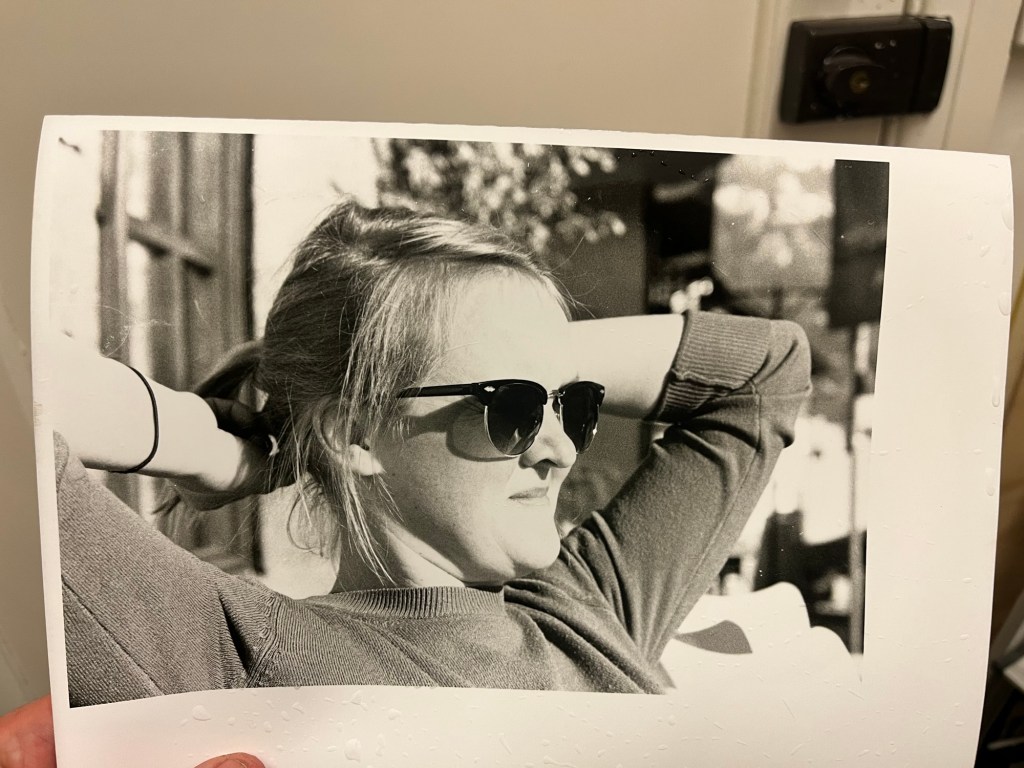
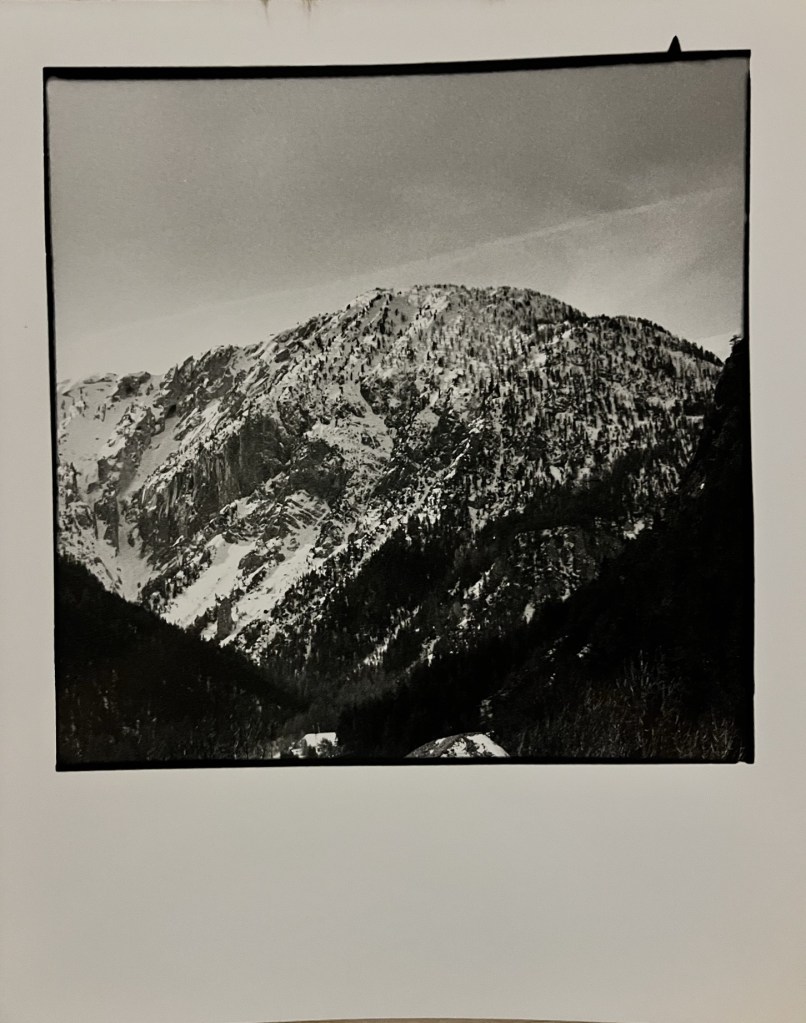
I will create another post once I’ve done the next test.
Also check out Stig’s Blogpost on this very topic a few years ago. It was a great help.
And check out John Finch and Pictorial Planet. His website and YouTube channel is a wealth of knowledge!


 Alexander Davenport
Leave a comment